


Wind
Autonomous Power for Wind Resource Assessment
Autonomous Power For WIND RESOURCE ASSESSMENT
Wind measurement campaigns are the foundation of renewable energy development — but operating sensitive measurement equipment in remote, northern, or snow-heavy regions requires uninterrupted, autonomous power. Grid extension is rarely feasible, and diesel generators compromise data quality while adding emissions, noise, and frequent servicing.
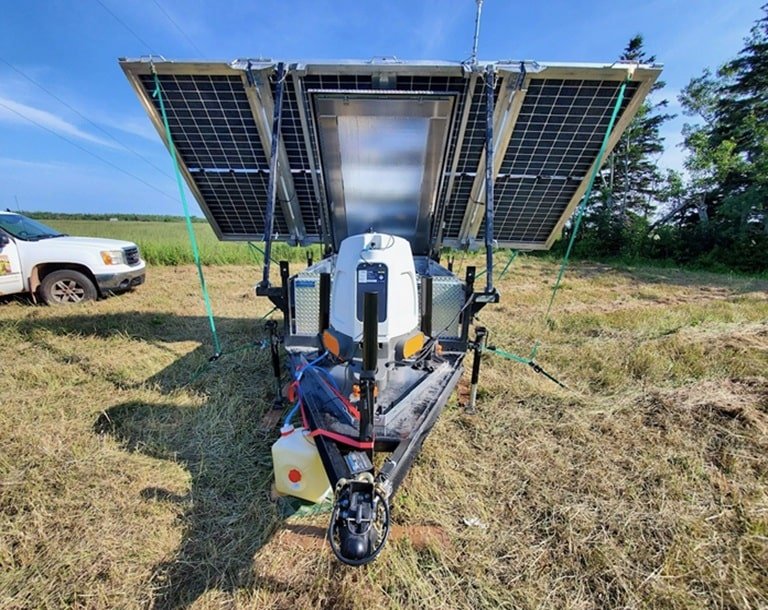
MOBISMART hybrid systems integrate solar arrays, battery storage, and fuel cells into rugged platforms designed for off-grid reliability. This Trifecta of Autonomous Power ensures continuous uptime for wind measurement equipment, delivering bankable data while reducing OPEX and environmental impact. Cold-climate engineering, pole-mounted arrays, and features like the Snow Snorkel keep systems running in even the harshest arctic conditions.
Applications
Wind measurement towers and masts
Remote pre-construction and feasibility campaigns
Long-term resource monitoring in northern climates
Climate and environmental monitoring stations
MOBISMART
Solutions for Wind Measurement
Trailers
MOBISUN-125
MOBISUN-350
MOBISUN-350 HELI
Containers
MOBIPOWER-5–20K
MOBIPOWER-14K
Cabinets
MOBICELL-350
MOBISUN-125 vs MOBISUN-350 — Which is Right for Your Wind Lidar?
Attribute
MOBISUN-125 (Methanol DMFC)
MOBISUN-350 (Propane SOFC)
Key Takeaways
Choose MOBISUN-125 for shorter projects where portability and methanol supply are convenient.
Choose MOBISUN-350 for multi-year, cold-climate, or mission-critical deployments where reliability and lower lifecycle costs matter most.
MOBICARE: Remote Intelligence
MOBICARE Remote Monitoring & Technical Support is what makes every MOBISMART's clean power solution more than just hardware.
With MOBICARE, operators and owners gain:
- 24/7 monitoring of solar, battery, and fuel cell performance
- Automated alerts and predictive servicing to prevent downtime
- Remote optimization to match site conditions and extend component life
- Peace of mind knowing MOBISMART’s experts are always watching
Not sure which trailer is right for your wind campaign?
Contact MOBISMART to find the best solution for your project’s site conditions and data requirements.
Request a Quote
FAQs
Why is hybrid power critical for wind Lidar applications?
Wind assessment using Lidar requires 12-24 months of continuous operation to generate bankable wind resource data for project financing. Any power interruption creates data gaps that can invalidate the assessment or require extended campaigns. Mobismart hybrid systems deliver the zero-downtime reliability these high-stakes projects demand. The fuel cell ensures continuous battery charging even during extended cloudy periods or northern winters when solar production drops significantly—conditions that would cause data-destroying outages with solar-only systems.
What Mobismart products are best for wind Lidar power supply?
MOBISUN-350 HYBRID Clean Power Trailer is the optimal solution for most wind Lidar deployments: 3.5kW continuous power exceeds Lidar requirements (typically 100-300W), 15+ kWh battery storage provides multi-day autonomy, fuel cell backup ensures zero-downtime through all weather conditions, trailer mobility allows repositioning as assessment needs change, and MOBICARE™ monitoring ensures data collection continuity. For helicopter-access sites, MOBISUN-350 HELI HYBRID provides the same capability in a sling-load transportable configuration.
How does the fuel cell extend Lidar campaign reliability?
Wind Lidar campaigns in northern locations face significant solar production drops during winter—potentially months of reduced output. The fuel cell bridges these low-solar periods by providing continuous battery charging regardless of weather. This ensures uninterrupted Lidar operation and complete wind resource datasets. Systems typically include fuel capacity for 6-12 months, with MOBICARE™ monitoring fuel consumption and alerting operators when resupply is needed—preventing the fuel exhaustion that would cause critical data gaps.
Can Mobismart systems handle remote mountain or coastal Lidar sites?
Yes. Mobismart MOBISUN HYBRID trailers are engineered for challenging Lidar deployment locations: mountain ridgelines (helicopter transport via MOBISUN-350 HELI HYBRID), coastal environments (corrosion-resistant construction, marine-grade components), extreme cold (operation to -40°C with thermal management), and high wind exposure (wind-rated panel mounting, ruggedized enclosures). Approximately 60 Mobismart systems are deployed across diverse North American environments including these challenging locations.
How does MOBICARE™ support wind assessment campaigns?
How do solar panels power remote wind monitoring stations?
Solar panels generate electricity during daylight hours and charge a battery bank that powers the wind monitoring equipment 24/7. The system typically supplies power to LiDAR units, meteorological sensors, data loggers, communications equipment, and remote monitoring systems located in areas without access to the electrical grid.
The batteries store excess solar energy produced during the day and provide power at night or during periods of poor weather. In regions with limited winter sunlight, a backup power source such as a fuel cell or generator may be integrated to ensure uninterrupted operation throughout the year.
Mobismart's off-grid power systems are designed specifically for remote wind resource assessment projects, combining solar panels, battery storage, intelligent controls, and optional fuel cell backup to deliver reliable, autonomous power for LiDAR and meteorological monitoring stations in even the most challenging environments.
What battery types are best for solar wind assessment systems?
The best battery type for a solar-powered wind assessment system depends on the site's climate, autonomy requirements, maintenance expectations, and budget. For most modern deployments, lithium iron phosphate (LFP) batteries offer the best combination of performance, cycle life, and efficiency. They provide high energy density, fast charging, excellent cycle life, and require virtually no maintenance.
For remote sites in extreme cold climates, lead-carbon batteries remain a popular option because they are robust, cost-effective, and tolerate partial-state-of-charge operation better than traditional AGM batteries. They are often used in northern wind monitoring applications where reliability and long service life are priorities.
AGM batteries are also used in some wind assessment systems due to their low upfront cost and proven track record, but they generally have a shorter cycle life and lower efficiency than LFP or lead-carbon alternatives.
For long-term remote deployments, Mobismart typically recommends LFP or lead-carbon battery technology, combined with solar power and optional fuel cell backup, to ensure reliable year-round operation of LiDAR units, meteorological towers, communications equipment, and remote monitoring systems.
Comparison of solar power supply solutions for wind measurement towers
Wind measurement towers and LiDAR systems require reliable, autonomous power to operate continuously in remote locations. The most common power solutions are solar-only systems, solar-battery systems, and hybrid systems that incorporate a backup power source.
A solar-only system has the lowest upfront cost but is generally suitable only for locations with excellent year-round solar resources and low power consumption. These systems are vulnerable to extended periods of poor weather and are rarely used for critical wind assessment projects.
A solar-plus-battery system is the most common solution for short- to medium-term deployments. Solar panels generate power during the day while batteries provide energy at night and during cloudy conditions. This approach offers reliable operation in many regions but may require larger battery banks in northern climates with limited winter sunlight.
A hybrid solar-battery system with fuel cell or generator backup provides the highest level of reliability and is often preferred for long-term wind resource assessment projects in Canada and other northern regions. The backup power source automatically maintains battery charge during extended periods of low solar production, ensuring uninterrupted operation and minimizing site visits.
For remote wind monitoring applications, Mobismart specializes in hybrid power systems that combine solar panels, battery storage, intelligent controls, remote monitoring, and optional fuel cell backup. These systems are designed to provide dependable year-round power for LiDAR units, meteorological towers, and communications equipment, even in harsh winter conditions.
How to set up a solar-powered system for wind resource assessment sites
Setting up a solar-powered system for a wind resource assessment site begins with determining the total power consumption of the LiDAR unit, meteorological sensors, communications equipment, and any auxiliary devices. Once the load is known, the solar array and battery bank can be sized to provide sufficient energy throughout the year, including periods of low solar production.
The solar panels are mounted to maximize sun exposure and connected to a charge controller that manages battery charging. The battery bank stores energy for nighttime operation and cloudy weather, while an inverter may be added if any equipment requires AC power. In regions with long winters or frequent periods of low sunlight, a backup power source such as a fuel cell or generator is often integrated to ensure continuous operation.
Remote monitoring is also critical, allowing operators to track battery status, solar production, equipment performance, and alarm conditions without visiting the site. Proper system sizing, weather-resistant enclosures, and reliable communications are essential for minimizing downtime and reducing maintenance costs.
Mobismart designs and deploys solar-powered and hybrid power systems specifically for wind resource assessment applications, combining solar panels, battery storage, remote monitoring, and optional fuel cell backup to provide reliable year-round power for LiDAR and meteorological monitoring stations in remote locations.
What are the advantages of solar over other power sources for wind assessment?
Solar power is one of the most popular energy sources for wind assessment projects because it provides reliable, autonomous power without the fuel costs, maintenance requirements, and environmental impacts associated with traditional generators. Once installed, solar systems can operate for years with minimal maintenance, making them ideal for remote wind monitoring locations.
Compared to diesel generators, solar power significantly reduces operating costs, eliminates routine refueling, and avoids noise and emissions that can complicate site access and environmental permitting. Solar systems also reduce the number of maintenance visits required, which can be a major cost savings for remote sites.
When combined with battery storage, solar power provides continuous energy for LiDAR units, meteorological towers, communications equipment, and data loggers. In northern climates or areas with limited winter sunlight, solar can be paired with a fuel cell or generator backup to ensure uninterrupted operation throughout the year.
Mobismart specializes in hybrid solar power systems for wind resource assessment, combining solar panels, battery storage, remote monitoring, and optional fuel cell backup to deliver reliable, low-maintenance power for long-term deployments in remote and challenging environments.
Best portable solar kits with battery storage for powering wind sensors
Mobismart Clean Power Solutions provides purpose-built solar power systems for remote wind assessment applications, including LiDAR units, meteorological towers, wind sensors, data loggers, and communications equipment. Unlike consumer-grade solar kits, Mobismart systems are designed for year-round autonomous operation in harsh environments and can integrate solar panels, battery storage, remote monitoring, and optional fuel cell backup. Their hybrid platforms are specifically engineered to provide continuous uptime for wind measurement equipment while reducing site visits and operating costs.
For wind resource assessment projects where reliable, bankable data is critical, a professionally engineered solar-battery system with remote monitoring and backup power provides significantly higher reliability than portable consumer power stations.
Where can I find solar power solutions tailored for wind energy projects
Mobismart Clean Power Solutions specializes in autonomous solar and hybrid power systems designed specifically for wind energy projects. Their systems provide reliable off-grid power for LiDAR units, meteorological towers, wind sensors, data loggers, and communications equipment used in wind resource assessment and development. By combining solar panels, battery storage, intelligent controls, remote monitoring, and optional fuel cell backup, Mobismart systems deliver dependable year-round operation in remote and challenging environments.
How to integrate solar power with wind resource assessment equipment
Integrating solar power with wind resource assessment equipment begins by calculating the total power requirements of the LiDAR unit, meteorological sensors, data logger, communications equipment, and any auxiliary devices. A solar array is then sized to generate sufficient energy, while a battery bank stores power for nighttime operation and periods of low sunlight.
A charge controller manages battery charging, and a DC or AC power distribution system supplies power to the monitoring equipment. Remote monitoring is typically included to track battery status, solar production, system performance, and alarm conditions. For sites in northern climates or locations with extended periods of poor weather, a backup power source such as a fuel cell can be integrated to ensure continuous operation.
Mobismart Clean Power Solutions designs complete solar and hybrid power systems for wind resource assessment projects, integrating solar panels, battery storage, intelligent controls, remote monitoring, and optional fuel cell backup to provide reliable, autonomous power for LiDAR units and meteorological monitoring stations in remote locations.
Who offers installation services for remote solar power systems for wind monitoring?
Mobismart Clean Power Solutions provides turnkey installation and deployment services for remote solar-powered wind monitoring systems used in wind resource assessment projects. The company specializes in powering LiDAR units, meteorological towers, wind sensors, data loggers, and communications equipment in remote and off-grid locations.
Mobismart designs, installs, and supports complete autonomous power systems that integrate solar panels, battery storage, intelligent controls, remote monitoring, and optional fuel cell backup. These systems are engineered to provide reliable year-round operation in challenging environments while minimizing site visits and maintenance requirements. From system design and commissioning through ongoing monitoring and support, Mobismart delivers a complete power solution for wind energy developers seeking dependable off-grid power for their wind measurement campaigns.
Portable solar power solutions with remote monitoring for wind resource sites
Mobismart Clean Power Solutions provides portable solar power systems specifically designed for wind resource assessment sites. These autonomous systems power LiDAR units, meteorological towers, wind sensors, data loggers, and communications equipment in remote and off-grid locations. By combining solar panels, battery storage, intelligent controls, and remote monitoring, Mobismart enables developers to track system performance, battery status, energy production, and alarms in real time without frequent site visits.
For projects requiring maximum reliability, Mobismart systems can also incorporate fuel cell backup to ensure uninterrupted operation during extended periods of low solar production. Designed for harsh environments and long-term deployments, these portable power solutions help wind developers collect accurate, continuous data while reducing operating costs and maintenance requirements.
Impact of snow and ice on solar panel performance for wind assessment.
Snow and ice can significantly reduce solar panel performance at wind resource assessment sites by blocking sunlight from reaching the panels. Even a thin layer of snow can substantially decrease energy production, while complete snow coverage may temporarily stop generation altogether. Ice accumulation can also reduce efficiency and delay snow shedding, particularly during extended cold-weather periods.
For remote wind monitoring stations, system designers typically compensate for winter conditions by increasing solar array size, adding battery storage, and incorporating a backup power source. Panel tilt angles are often optimized to encourage snow shedding and maximize winter energy production. Remote monitoring systems are also used to track solar performance and identify periods when snow accumulation may be affecting output.
In northern climates, where winter solar production can be limited for extended periods, relying solely on solar power may not provide sufficient energy for continuous operation. For this reason, Mobismart Clean Power Solutions often integrates battery storage and optional fuel cell backup into its wind assessment power systems to ensure uninterrupted operation of LiDAR units, meteorological towers, communications equipment, and data loggers throughout the winter months.